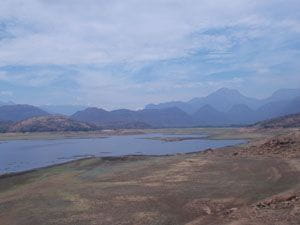
Bhavani Sagar Dam-Harnessing Water for Agriculture and Power
No scriptBhavani Sagar Dam: Harnessing Water for Agriculture and Power
The Bhavani Sagar Dam, located near Sathyamangalam in Erode district, Tamil Nadu, is one of the largest earthen dams in the country. Serving multiple purposes such as irrigation, hydroelectric power generation, and flood control, it stands as a testament to Tamil Nadu’s commitment to sustainable water management and agricultural growth.
Overview
Built across the Bhavani River, a major tributary of the Cauvery River system, the Bhavani Sagar Dam plays a crucial role in water conservation and agricultural development in western Tamil Nadu. It supports the livelihoods of thousands of farmers and contributes significantly to the state’s agrarian economy.
Location
The dam is at Bhavanisagar, about 16 km west of Sathyamangalam and about 35 km from Gobichettipalayam in Erode District, and roughly 80 km by road from Coimbatore. Its strategic location makes it a key source of irrigation and power for the surrounding districts.
Purposes
- Irrigation: The primary purpose of the Bhavani Sagar Dam is irrigation. It supplies water to vast stretches of agricultural land in the Bhavani and Lower Bhavani Project (LBP) command areas, supporting crops like paddy, sugarcane, banana, and cotton.
- Hydroelectric Power: Two power stations at the dam - Lower Bhavani and the Right Bank Canal station, 8 MW each - give a total of 16 MW, contributing to Tamil Nadu’s renewable energy capacity.
- Flood Control: By regulating river flow during monsoon seasons, the dam mitigates the risk of flooding and ensures the safety of downstream settlements and agricultural lands.
Construction and Capacity
- Construction: Work began in 1948 as the Lower Bhavani Project - the first major irrigation project started in India after independence. Completed in 1955 and opened in 1956, the Bhavani Sagar Dam is a massive earthen dam built with clay, sand, and gravel, reinforced with concrete structures for spillways and sluices.
- Dimensions: The dam is about 9 kilometers long and 40 meters high from its foundation, with a full reservoir level of 120 feet, making it one of the longest earthen dams in Asia.
- Reservoir Capacity: The reservoir, known as the Bhavanisagar Reservoir, has a total storage capacity of about 32.8 TMC (Thousand Million Cubic) feet of water, serving both irrigation and domestic needs.
Environmental Impact
- Ecological Balance: The reservoir and surrounding forests support a variety of aquatic species, birds, and wildlife, contributing to the biodiversity of the region.
- Water Management: Efficient management of the reservoir ensures optimal water distribution for irrigation while maintaining ecological sustainability through seasonal regulation.
Visitor Experience
- Scenic Views: The dam offers stunning panoramic views of the Western Ghats and lush green agricultural fields, making it a popular picnic and sightseeing spot.
- Boating: Boating on the reservoir is offered at times, depending on the water level and local permission - ask at the dam before planning around it.
- Nearby Attractions: The nearby Sathyamangalam Tiger Reserve and Bannari Amman Temple are popular tourist destinations often visited along with the dam.
How to Reach from Coimbatore
- Via Mettupalayam and Sirumugai: Take the Mettupalayam Road (NH 181) to Mettupalayam, then the Sirumugai road east to Bhavanisagar. On the way you pass Then Tirupathi temple at Jadayampalayam, about 5 km out of Mettupalayam.
- Via Sathyamangalam: Go to Sathyamangalam by the Annur-Puliampatti road, then drive about 16 km west to the dam.
- By bus: Town buses run to Bhavanisagar from Sathyamangalam and Mettupalayam; check current timings at the bus stand.
- By train and air: The nearest large railway station and airport are in Coimbatore; Mettupalayam station is closer but has fewer trains.
Tips for Visitors
- Timing: Visit in daylight. Access to the dam top and the park below is controlled by the dam authorities, and hours can change - check locally before you go (as of September 2026).
- Best season: After the monsoons (roughly October to January), when the reservoir is fuller and the weather is cooler.
- Safety: Do not enter the water or climb the embankment where it is fenced off; the reservoir is deep and levels change with releases.
- Combine it: Downstream on the same river, Kodiveri Dam near Gobichettipalayam is a popular picnic spot. For another Kongu-region reservoir of the same era, Amaravathi Dam near Udumalpet was built in 1957.
Community Impact
- Agricultural Prosperity: The dam has transformed the agricultural landscape of the Bhavani basin, ensuring reliable water supply and boosting crop yields across multiple districts.
- Economic Development: Through irrigation and power generation, Bhavani Sagar Dam supports regional industries, contributes to rural development, and strengthens the local economy.
Conservation Efforts
- Water Conservation: Continuous efforts are made to modernize irrigation canals, reduce water wastage, and encourage sustainable water use among farmers.
- Community Outreach: Awareness campaigns and eco-education programs promote responsible water use and environmental protection among local communities.
Conclusion
The Bhavani Sagar Dam stands as an engineering marvel and a lifeline for Tamil Nadu’s agricultural and energy sectors. Beyond its practical functions, it symbolizes harmony between human ingenuity and natural resources, promoting sustainability and prosperity for generations.
Visit the Bhavani Sagar Dam to witness its impressive scale, enjoy its scenic surroundings, and understand its pivotal role in shaping the agricultural and environmental landscape of Tamil Nadu.
Frequently Asked Questions (FAQ)
Where is Bhavanisagar Dam?
At Bhavanisagar in Erode district, about 16 km west of Sathyamangalam and roughly 80 km by road from Coimbatore.
When was Bhavanisagar Dam built?
Work began in 1948 as the Lower Bhavani Project, the first major irrigation project started in India after independence. It was completed in 1955 and opened in 1956.
How big is Bhavanisagar Dam?
It is an earthen dam about 9 km long and 40 m high from its foundation, with a gross storage of about 32.8 TMC ft and a full reservoir level of 120 ft.
Does Bhavanisagar Dam produce electricity?
Yes. Two power stations at the dam have 8 MW each, a total of 16 MW.
How do I reach Bhavanisagar Dam from Coimbatore?
Drive via Mettupalayam and Sirumugai, or via Annur to Sathyamangalam and then 16 km west. Town buses run from Sathyamangalam and Mettupalayam.