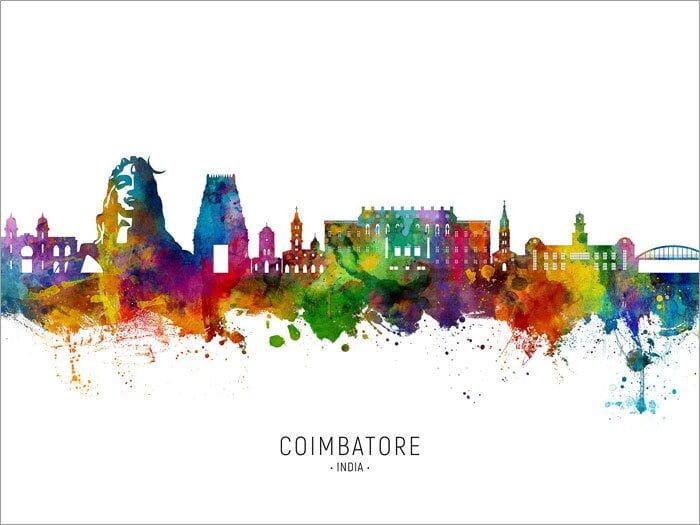
Coimbatore The Manchester of South India
No scriptCoimbatore The Manchester of South India - A Blend of Industry, Culture, and Nature
Coimbatore (Kovai) in Tamil Nadu is the city known as the Manchester of South India, and also as the Manchester of Tamil Nadu. The name comes from its cotton textile industry. Below: why it got the name, how the mill town grew, and some key facts about the city.
Why Coimbatore is called the Manchester of South India
Manchester in England was the centre of the world's cotton textile industry during the Industrial Revolution, so "Manchester" became the nickname for cities built around cotton mills. Coimbatore earned it through its many spinning and weaving mills, which made it the leading textile centre of South India. (Ahmedabad in Gujarat is the city usually called the Manchester of India.)
How the mill town grew
| When | What happened |
|---|---|
| 1888 | Robert Stanes founded Coimbatore Spinning and Weaving Mills, the city's first modern textile mill. |
| 1906-1929 | More mills followed, among them Kaleeswara (1906), Ranga Vilas (1922), Radhakrishna (1924), Cambodia (1928) and Vasantha (1929). |
| Early 1930s | Electricity from the Pykara hydroelectric project reached Coimbatore. Mills that had run on coal-fired machinery could now use electric power, and many more mills were set up. |
| Today | Textiles remain important, alongside pumps and motors, foundries, engineering and IT. |
The textile boom also drew engineering workshops that built and repaired mill machinery, which is one reason Coimbatore later grew into a pump and engineering centre. For the full story from mill town to today's city, read Evolution of Coimbatore from Cotton City to Smart City.
Key facts about Coimbatore
-
Location and Geography: Coimbatore is situated in the western part of Tamil Nadu, near the border with Kerala. It is surrounded by the Western Ghats mountain range on the west and the Nilgiri Biosphere Reserve on the north.
-
Economic Hub: Known as the "Manchester of South India," Coimbatore is a significant industrial and commercial center. It has a strong presence in textiles, manufacturing, engineering, and healthcare industries. The city is home to numerous textile mills and engineering firms, contributing significantly to India's economy.
-
Educational Institutions: Coimbatore is recognized for its educational institutions, including universities, engineering colleges, and research centers. Institutions like the Coimbatore Institute of Technology (CIT) and the Tamil Nadu Agricultural University (TNAU) are well-regarded in their respective fields.
-
Culture and Festivals: The city has a rich cultural heritage, with a blend of Tamil and Kerala influences. Festivals like Pongal, Diwali, and Tamil New Year are celebrated with enthusiasm. Coimbatore is also known for its vibrant music and dance traditions.
-
Tourism and Attractions: Coimbatore serves as a gateway to several tourist destinations such as Ooty (Udhagamandalam), known for its cool climate and tea estates, and Valparai, a picturesque hill station. The city itself has attractions like the Marudhamalai Murugan Temple, Perur Pateeswarar Temple, and the VOC Park and Zoo.
-
Transportation: Coimbatore is well-connected by road, rail, and air. It has an airport, Coimbatore International Airport (CJB), which connects the city with major Indian cities and international destinations.
-
Climate: The climate in Coimbatore is generally pleasant, characterized by hot summers, mild winters, and moderate rainfall during the monsoon season. The proximity to the Western Ghats influences the weather patterns.
-
Business and Commerce: Apart from traditional industries, Coimbatore has also seen growth in information technology (IT) and business process outsourcing (BPO) sectors. More on this in Coimbatore, the industrial powerhouse of South India. The city hosts IT parks and business centers, contributing to its economic diversification.
Overall, Coimbatore is a dynamic city known for its industrial prowess, educational institutions, cultural richness, and accessibility to natural beauty spots in the Western Ghats region. It continues to play a significant role in the socio-economic landscape of South India.
Looking for a business in the city? Search the Kovai Yellow Pages directory of Coimbatore business listings.
Frequently Asked Questions (FAQ)
Which city is known as the Manchester of South India?
Coimbatore in Tamil Nadu, because of its large cotton spinning and weaving industry.
Why is Coimbatore called the Manchester of South India?
Like Manchester in England, it grew around textile mills - from the first mill in 1888 to many more after Pykara hydroelectric power arrived in the early 1930s.
What was the first textile mill in Coimbatore?
Coimbatore Spinning and Weaving Mills, founded by Robert Stanes in 1888.
Is Coimbatore also called the Manchester of Tamil Nadu?
Yes. Both names refer to Coimbatore and its textile industry.
Which city is called the Manchester of India?
Ahmedabad in Gujarat is usually called the Manchester of India; Coimbatore is the Manchester of South India.