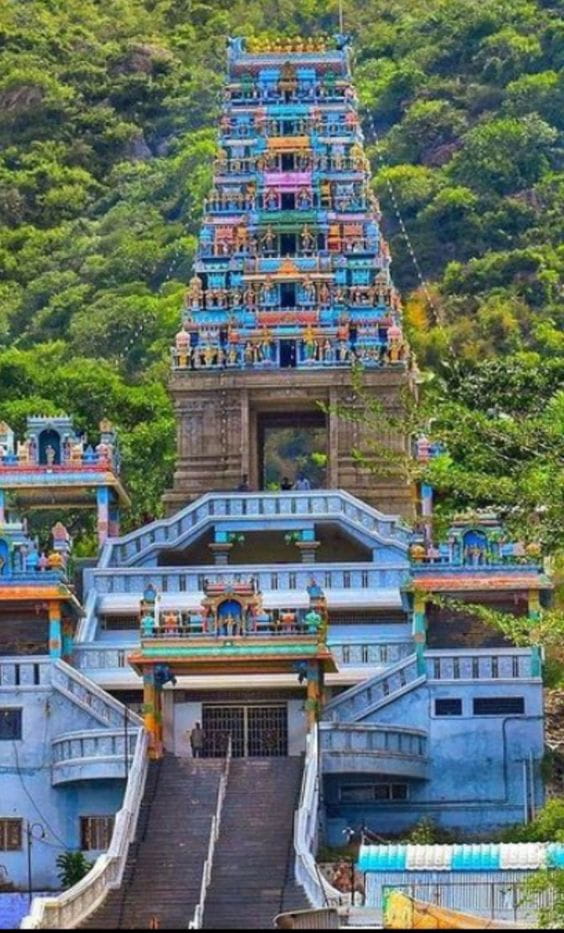
Maruthamalai A Sacred Hill Temple
No scriptMaruthamalai A Sacred Hill Temple and the Legacy of Pambatti Siddhar
Location and Access:
Maruthamalai (also spelt Marudhamalai) is about 15 kilometres west of Coimbatore town, past Vadavalli. If you’re starting from Gandhipuram in Coimbatore:
• By Road: You can take a taxi, auto-rickshaw, or a town bus from Gandhipuram or Ukkadam to the foothill at Marudhamalai Adivaram. The journey usually takes around 30-45 minutes depending on traffic.
• By Train: The nearest railway station is Coimbatore Junction. From there, you can hire a taxi or take a bus to Maruthamalai.
• Up the hill: From Adivaram you can climb the steps or take the temple bus up the ghat road. Our Adivaram to temple guide compares the options.
Timings and Rules:
• Timings: The official HR&CE website gives 6:00 AM to 1:00 PM and 2:00 PM to 8:00 PM, and 6 AM to 8 PM without a break on special days. General darshan is free (as of September 2026 - check the temple website before you go).
• Evening rule: The Forest Department restricts devotees going from Adivaram to the hilltop after 7:00 PM because of wildlife movement, so start your way up well before that.
Food and Stay:
• Most visitors come as a half-day trip from the city. Coimbatore has hotels and restaurants for every budget, and there are snack and refreshment stalls at the foothill - see our Marudhamalai Adivaram foothill guide.
Temple Specialties and Uniqueness:
• Dedication: Maruthamalai is dedicated to Lord Murugan, the deity worshipped as the God of War and Victory in Hinduism.
• History: According to the HR&CE temple website, the temple has existed since the 9th century; it was first built under the Kongu Cholas and later enlarged under Vijayanagara rule. Today it has a seven-tier raja gopuram, and the hilltop is about 741 metres above sea level.
• Medicinal Plants: The hill is known for its many medicinal plants, which are part of its Siddha associations; the name is usually explained as marutham (the marutha tree) + malai (hill). Their traditional uses are matters of belief, not medical advice.
• Festivals: Thai Poosam, Panguni Uthiram and Skanda Sashti are celebrated with great fervour, and the hill is very crowded on these days and on Krithigai days.
Additional Information:
• Visiting Tips: It’s advisable to visit early in the morning to avoid crowds and to experience the serene atmosphere. Remember to dress modestly as it is a place of worship.
• Local Customs: Respect local customs and traditions while visiting the temple, such as removing footwear before entering the inner sanctum.
Maruthamalai is not just a place of religious significance but also offers a tranquil escape amidst nature, making it a cherished destination for both spiritual seekers and nature enthusiasts alike.
Pambatti Siddhar and Maruthamalai
Pambatti Siddhar is a legendary figure associated with Maruthamalai temple and is revered as a Siddhar (a perfected being in Tamil tradition) who lived in the vicinity of the hill. Here are some details about Pambatti Siddhar and his connection to Maruthamalai:
Pambatti Siddhar is intricately connected with Maruthamalai through various legends and spiritual narratives:
1. Legendary Residence: According to local beliefs, Pambatti Siddhar is said to have meditated and lived in the vicinity of Maruthamalai hill. His presence in the area adds to the spiritual significance of Maruthamalai as a center for Siddha tradition and spiritual practices.
2. Caves and Meditation Sites: There are caves and spots around Maruthamalai where Pambatti Siddhar is believed to have performed intense penance and meditation. These sites are often visited by devotees seeking spiritual blessings and guidance.
3. Spiritual Influence: Pambatti Siddhar's teachings and spiritual influence are deeply ingrained in the cultural fabric of Maruthamalai. His contributions to Siddha literature and his status as a Siddhar (a perfected being) elevate the spiritual aura of the temple and its surroundings.
4. Pilgrimage Destination: Many devotees visit Maruthamalai not only to seek blessings from Lord Murugan but also to pay respects to Pambatti Siddhar. His presence enhances the holistic spiritual experience at Maruthamalai, attracting pilgrims and seekers of spiritual knowledge.
Overall, Pambatti Siddhar's connection with Maruthamalai enriches the temple's heritage and spiritual significance, making it a place revered for its blend of religious devotion and Siddha tradition.
• Legend: Pambatti Siddhar, also known as Pambatti Munivar, is believed to have meditated and performed penance in the caves and surroundings of Maruthamalai.
• Contributions: He is said to have authored several spiritual texts and poems, contributing significantly to Tamil literature and Siddha tradition.
• Association with Maruthamalai: Pambatti Siddhar’s presence and influence at Maruthamalai have made it a revered place for Siddha practitioners and spiritual seekers seeking his blessings and guidance.
Temple and Siddha Tradition:
• Siddha Tradition: Maruthamalai is linked with the Tamil Siddha tradition, which values the medicinal plants found in these hills.
• Pilgrimage: Devotees often visit Maruthamalai not only for Lord Murugan’s blessings but also to pay homage to Pambatti Siddhar and seek his spiritual wisdom.
Local Beliefs and Practices:
• Spiritual Significance: Many devotees seek Pambatti Siddhar’s blessings for their spiritual life.
• Cultural Heritage: The tales of Pambatti Siddhar and his spiritual feats are integral to the cultural heritage of the region, inspiring devotion and reverence among visitors.
Pambatti Siddhar’s association adds a layer of spiritual depth and cultural richness to the Maruthamalai temple, making it not just a religious site but also a place deeply intertwined with Tamil Siddha tradition and spiritual practice.
Frequently Asked Questions (FAQ)
What are the Maruthamalai temple timings?
The HR&CE website gives 6 AM to 1 PM and 2 PM to 8 PM, and 6 AM to 8 PM without a break on special days (as of September 2026).
How old is the Maruthamalai temple?
According to the HR&CE temple website it has existed since the 9th century, first built under the Kongu Cholas and later enlarged under Vijayanagara rule.
Who is Pambatti Siddhar?
One of the 18 Tamil Siddhars, believed to have meditated in a cave near the Maruthamalai temple, which devotees still visit.
Can I go up Maruthamalai at night?
The Forest Department restricts devotees going from Adivaram to the hilltop after 7 PM because of wildlife, so go up well before that.